How we designed Pelion's connectivity landing page — turning multi-network eSIM into a single promise an engineering lead can verify with five free SIMs.

Pelion provides cellular IoT connectivity to 1,000+ businesses running deployed devices — fleet trackers, EV chargers, smart meters — across 150+ countries on a single multi-network eSIM.
The buyer is an engineering lead. Technical, sceptical, and already burned by a carrier contract. They don't want a brochure; they want the failure modes and a way to test it themselves.
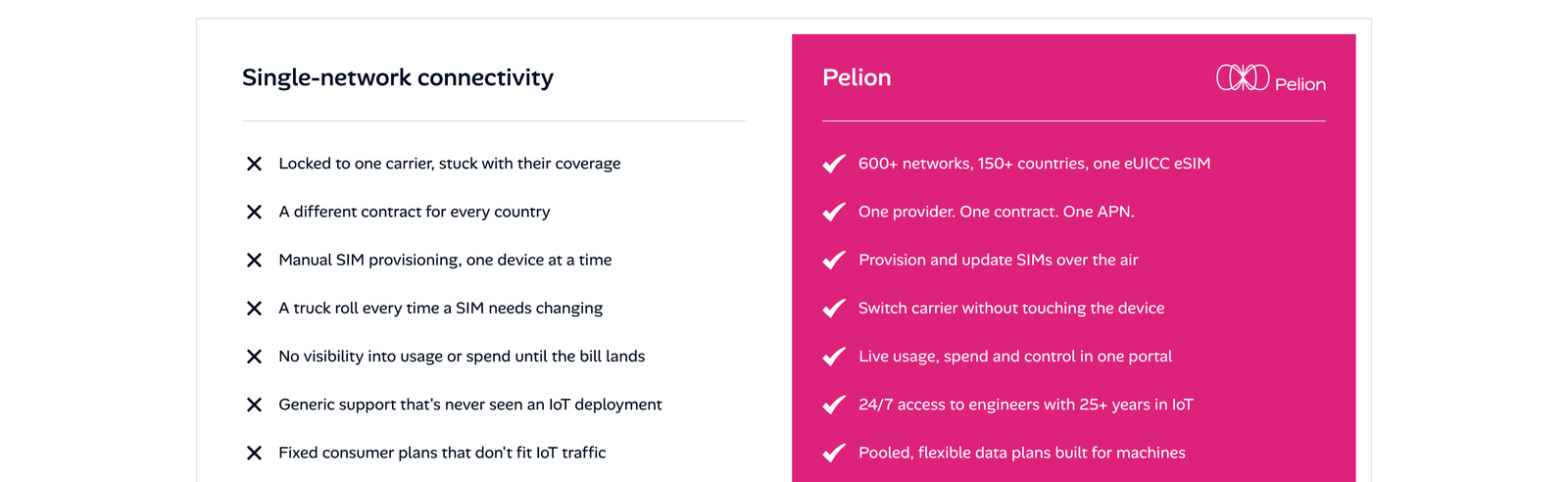
Most deployments don't fail on the hardware. They fail on the connectivity contract signed two years earlier — one carrier, one country, one truck roll per SIM swap. We made that cost the opening argument.

Multi-carrier cellular across 4G/LTE, 5G, NB-IoT and CAT-M1/LTE-M — so your device connects to the strongest signal available, not the only one you're contracted to.
An engineering lead reads a page as a list of risks. So every block names the risk in their words, then answers it with the product doing the work.
Our SIMs are eUICC-enabled, so carrier profiles update over the air. No swaps. No truck rolls. No engineer driving four hours to a rural substation to change a piece of plastic.

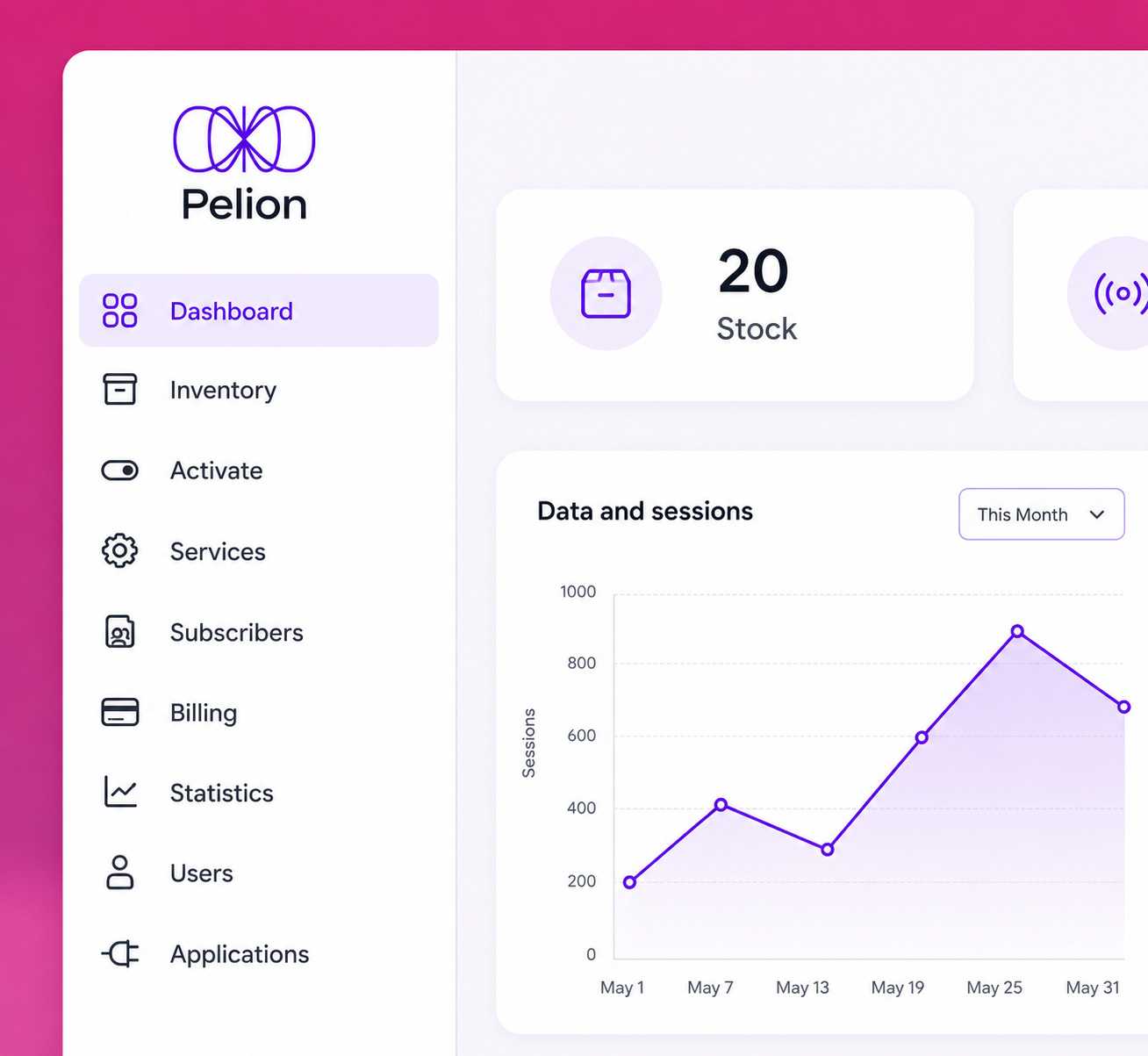
See usage, control spend, push OTA updates and troubleshoot a device on the other side of the world — without raising a ticket or waiting for a bill to tell you what happened.

A single-network SIM has one answer when its carrier drops: wait. A Pelion SIM has 600 answers. Failover is automatic, and your device stays online while somebody else's outage becomes somebody else's problem.

That's exactly what eUICC is for. Profiles move over the air, so migrating an existing estate doesn't mean dispatching engineers to every site. And you don't do it alone — you get people who've done it before.

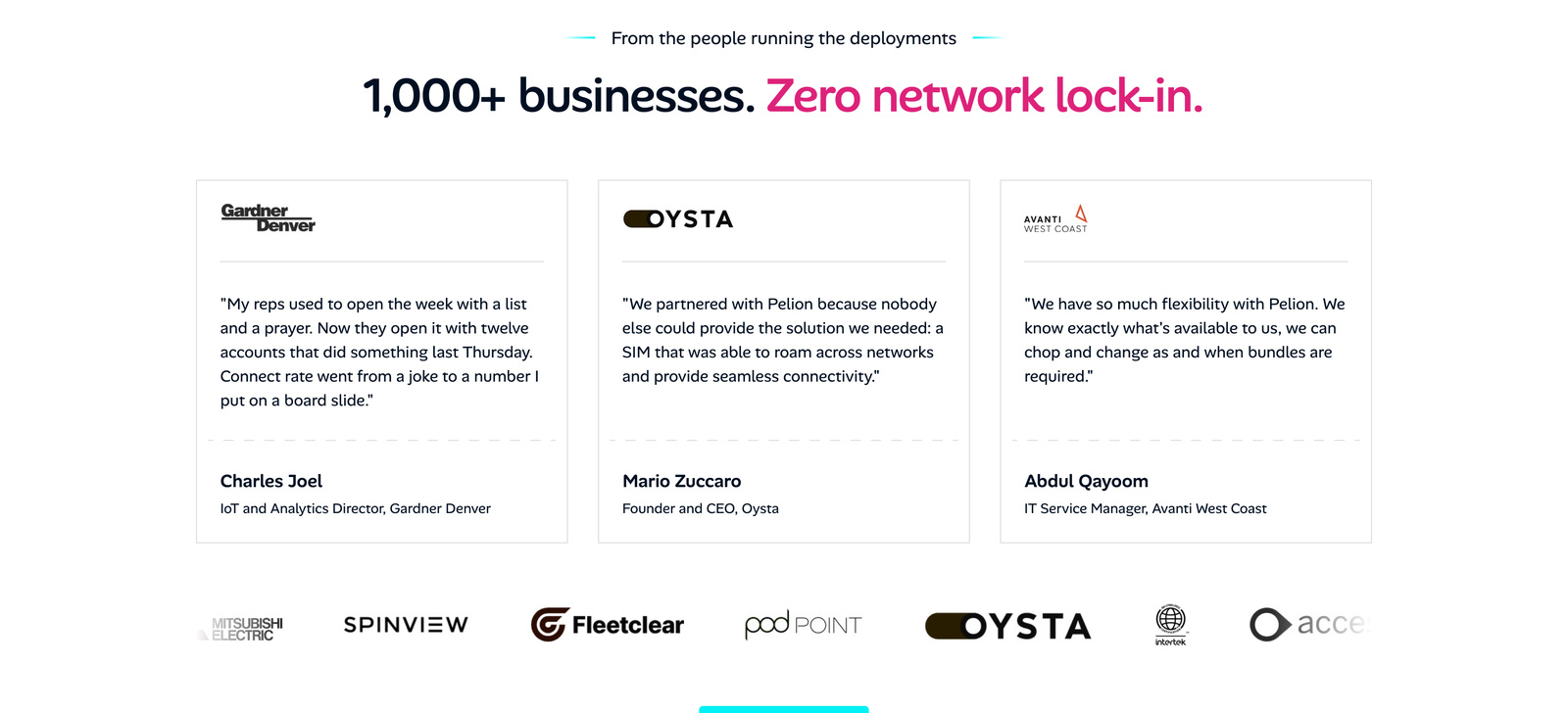
A claim from the vendor is marketing. A claim from the buyers is evidence. We put the G2 ranking — placed there by the businesses actually running deployments — above the pricing conversation, not below it.
See how it convertsNamed engineers at named companies, each quote pointed at a different objection — onboarding speed, roaming, and the freedom to change bundles without a renegotiation.

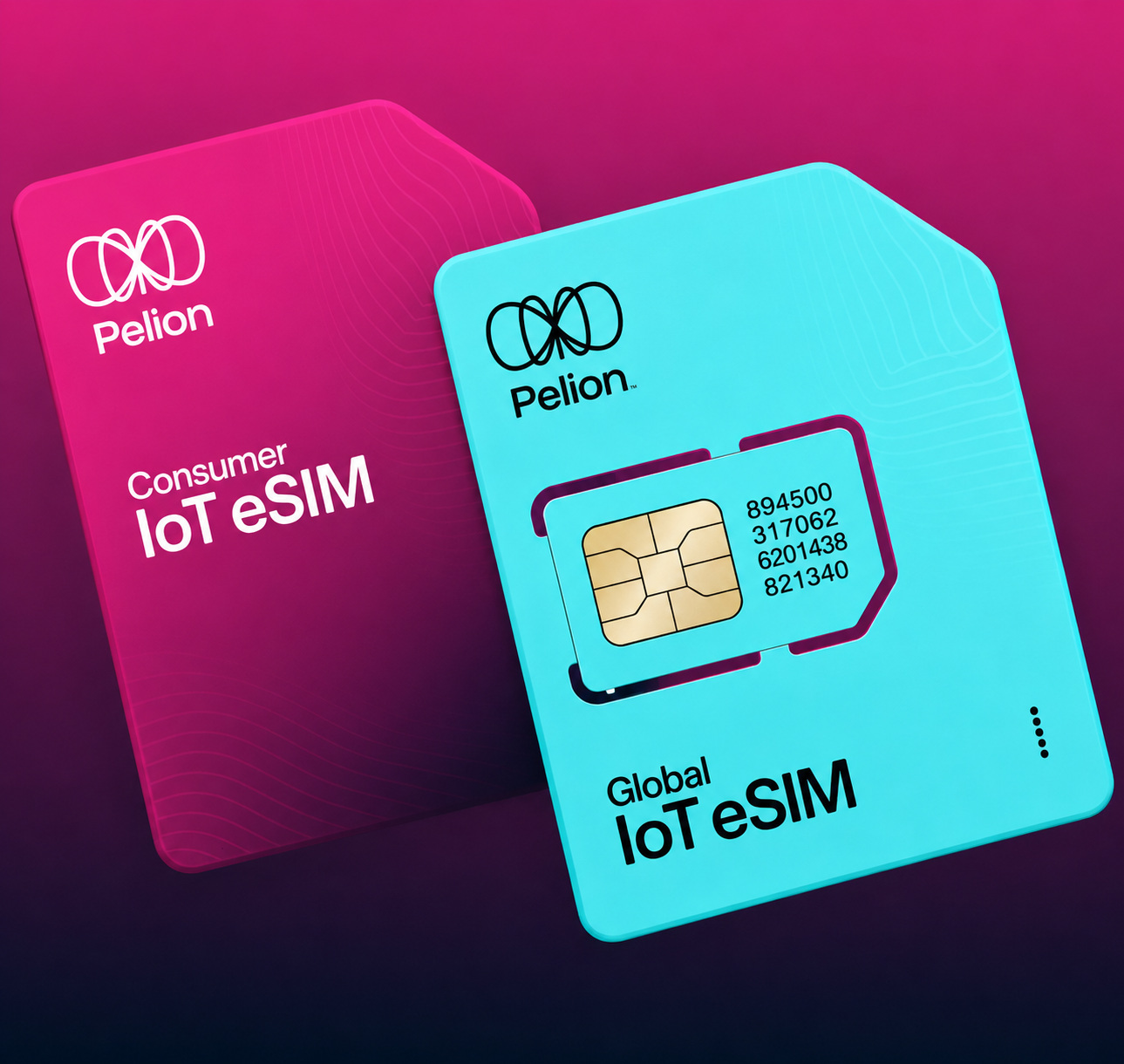
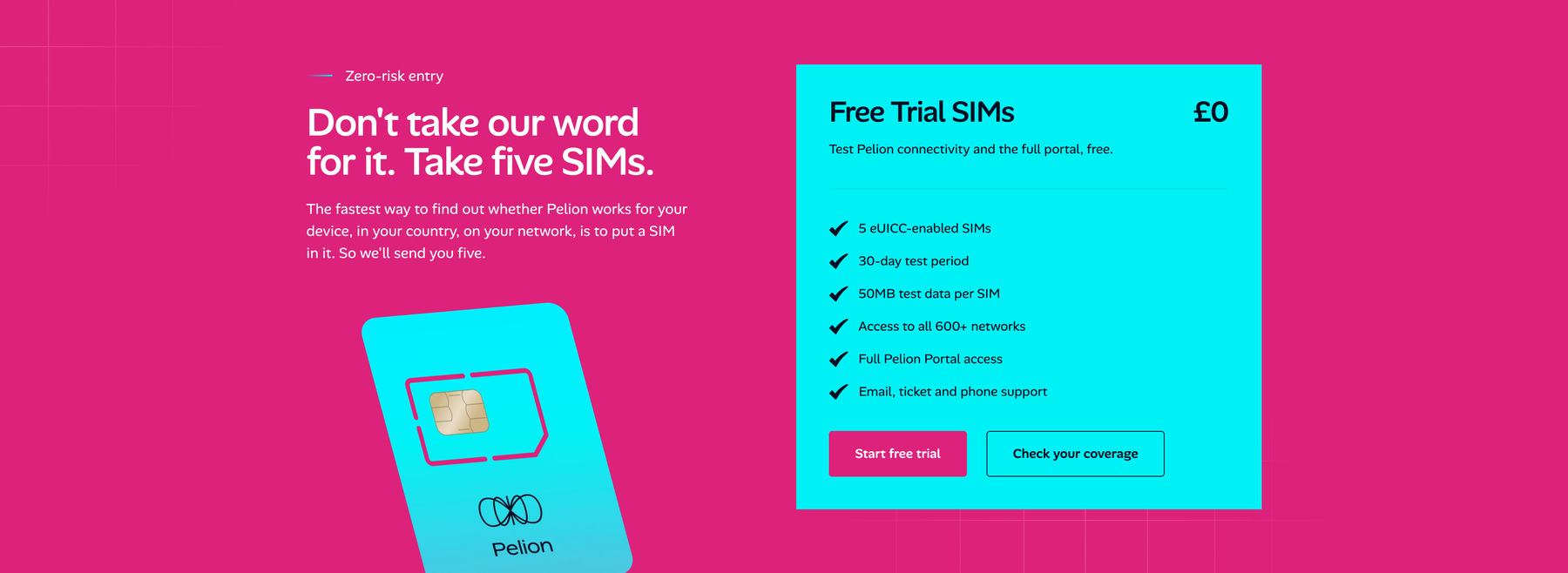
The whole page builds to one irresistible, zero-risk ask. Not a demo request. Not a sales call. Five real SIMs, free, posted to the engineer so they can test coverage on their own device, on their own network.
For a technical buyer, the fastest way to earn belief is to let them disprove you.


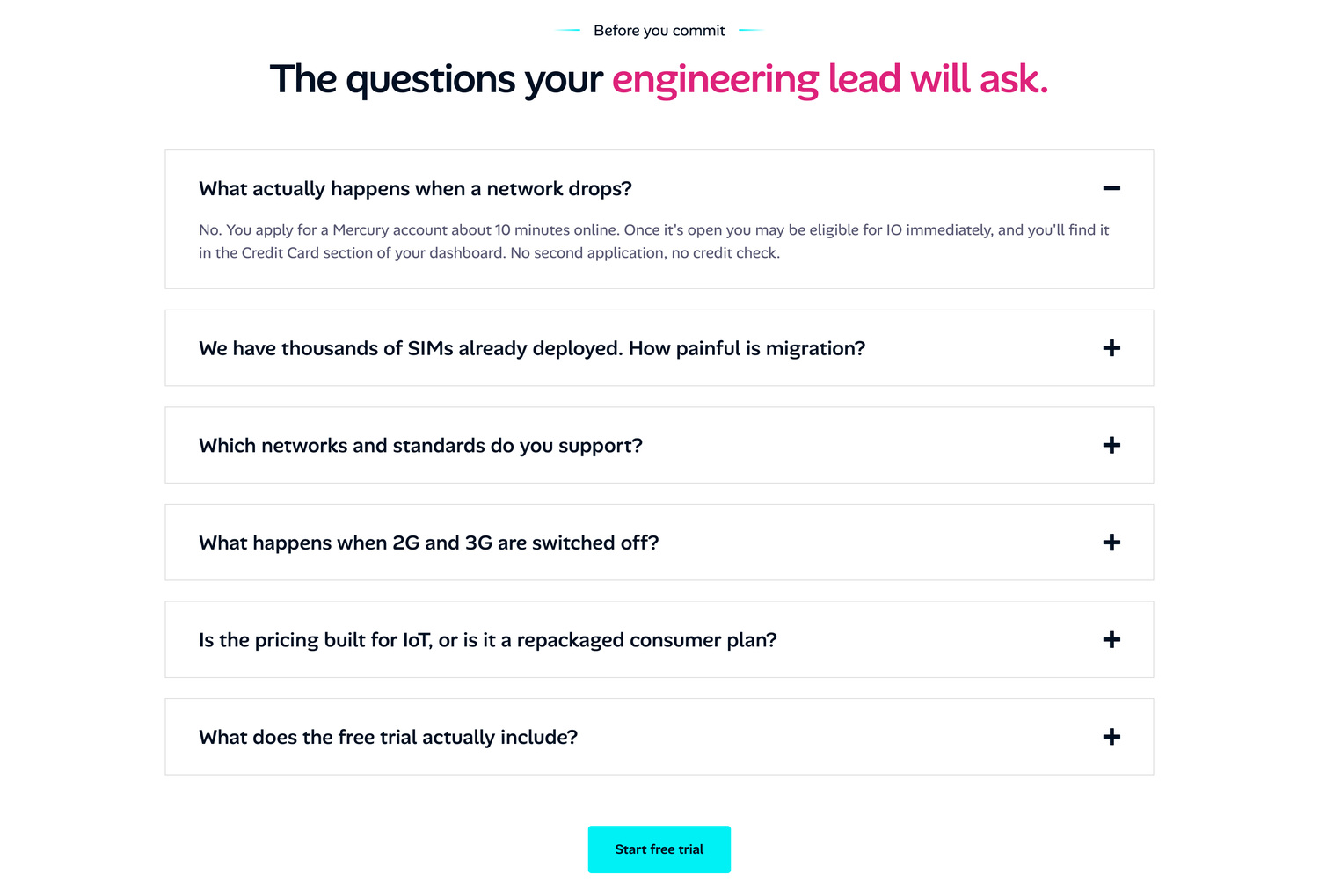
Not "What is an eSIM?" but "What actually happens when a network drops?" and "We have thousands of SIMs already deployed. How painful is migration?"
Every question is one a real engineering lead asks on the first call. Answering them on the page removes the objection before it needs a meeting.
We design and build conversion-first landing pages for IoT, infrastructure and deep-tech products — where the buyer is an engineer and the fine print is the pitch.
You're viewing one of nine landing-page projects. Click any card below to open a different case study.